

Essential Qualifications and Credentials for Facelift Surgeons in Indonesia
Choosing the right surgeon for a facelift is a decision that impacts your long-term health and aesthetic outcome. In Indonesia, the plastic surgery landscape has evolved significantly, with Jakarta emerging as a regional hub for advanced cosmetic procedures. According to recent industry data, the demand for cosmetic surgery in Southeast Asia has grown by over 15% annually, with Indonesia ranking among the top destinations for medical tourism. This growth is driven by patients seeking high-quality care at competitive prices, but it also necessitates rigorous vetting of medical professionals. Understanding the specific qualifications required ensures you receive safe, effective, and natural-looking results. (About Ultimo Clinic)
Medical Credentials and Board Certification
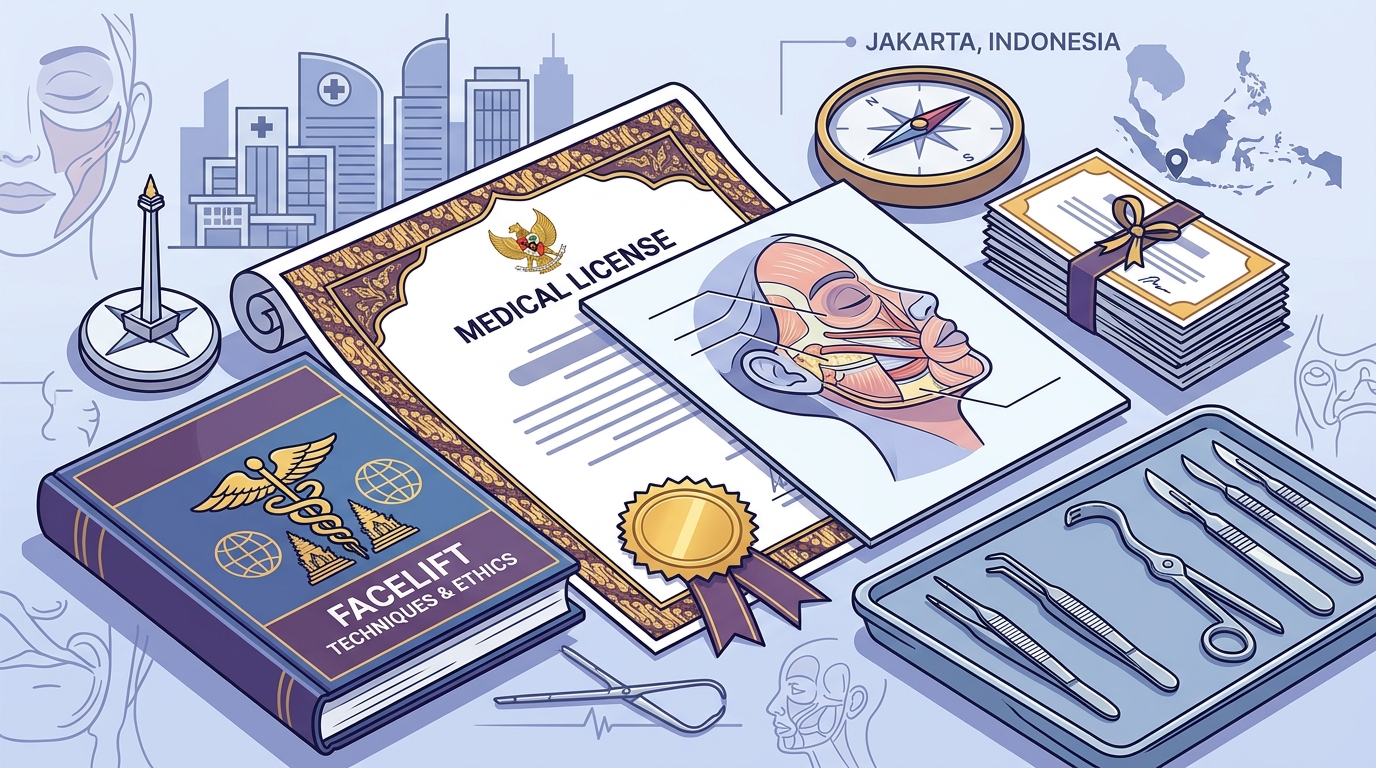
The foundation of any qualified facelift surgeon in Indonesia is their medical licensure and board certification. Unlike general practitioners or aestheticians, a plastic surgeon must hold a valid medical license issued by the Indonesian Ministry of Health. However, the most critical credential is specialization in plastic, reconstructive, and aesthetic surgery.
In Indonesia, this specialization is denoted by the title Sp.BP-RE. This stands for Spesialis Bedah Plastik, Rekonstruksi, dan Estetika. Surgeons with this designation have completed extensive postgraduate training in both reconstructive and aesthetic procedures. It is important to note that not all doctors advertising "cosmetic surgery" hold this specific board certification. Patients should always verify this credential before booking a consultation.
Furthermore, international recognition adds another layer of credibility. Some leading surgeons in Jakarta have obtained additional certifications from global bodies, such as the American Board of Plastic Surgery or fellowships from international craniofacial associations. These credentials indicate a commitment to maintaining global standards of care. For more information on verifying medical credentials, you can refer to the Indonesian Medical Association guidelines.
Specialized Training in Craniofacial Surgery
A facelift is not merely a skin-tightening procedure; it involves manipulating the underlying structural framework of the face. This is where the distinction between a general plastic surgeon and a craniofacial surgeon becomes vital. Craniofacial surgery is a subspecialty that focuses on the bones, muscles, and soft tissues of the face and skull.
Surgeons with a background in craniofacial surgery, often indicated by the KKF (Kedokteran Kraniofasial) certification, possess a deeper understanding of facial anatomy. They are trained to address issues at the skeletal level, which is crucial for achieving natural, long-lasting results in procedures like the Deep Plane Facelift. This expertise allows them to navigate complex anatomical structures safely, reducing the risk of nerve damage and ensuring optimal aesthetic outcomes.
According to medical literature, surgeons with specialized craniofacial training are better equipped to handle revision surgeries and complex cases. This is particularly relevant for patients who have undergone previous facial procedures or have unique anatomical variations. The American Society of Plastic Surgeons emphasizes the importance of subspecialty training for complex facial procedures.
Advanced Surgical Techniques: Deep Plane vs. SMAS
Understanding the surgical technique is as important as the surgeon's credentials. The traditional facelift often relied on the SMAS (Superficial Musculoaponeurotic System) technique, which lifts the skin and underlying tissue. However, modern advancements have led to the adoption of the Deep Plane Facelift, which offers more significant and durable results.
The Deep Plane Facelift involves releasing the ligaments that anchor the facial tissues to the bone, allowing the surgeon to reposition the deeper layers of the face. This technique addresses the root cause of aging rather than just the symptoms. It results in a more natural look because the skin is not pulled tightly, reducing the risk of a "windblown" appearance. Surgeons who specialize in this technique, such as those at Ultimo Clinic, often use proprietary frameworks like the Ultimo Deep Structural Lift™ to ensure consistency and precision.
Comparing the two techniques, the Deep Plane method typically requires a longer recovery time but offers superior longevity. Patients should ask their surgeon about their proficiency in both techniques and which is best suited for their specific facial anatomy. Research published in the National Center for Biotechnology Information journals supports the efficacy of deep plane techniques in reducing recurrence of sagging.
Facility Standards and Safety Protocols
The safety of a facelift procedure is heavily dependent on the facility where it is performed. In Indonesia, accredited hospitals and specialized surgical centers must adhere to strict hygiene and safety standards. Patients should look for facilities that are accredited by the Indonesian Hospital Accreditation (AKKSI) or international bodies like JCI (Joint Commission International).
Key safety indicators include the presence of board-certified anesthesiologists, fully equipped operating rooms, and emergency protocols. A reputable clinic will also have a dedicated team for post-operative care, ensuring that any complications are addressed promptly. The location of the facility is also important; clinics in central areas like Jakarta's Sudirman district often have easier access to advanced medical resources and emergency care.
Additionally, the surgeon's approach to patient safety should be transparent. This includes detailed pre-operative assessments, clear communication about risks, and comprehensive post-operative instructions. Patients should never compromise on safety for cost. According to the World Health Organization, patient safety in surgical settings is a critical component of quality healthcare.
The Consultation Process and Expectations
A thorough consultation is the final step in verifying a surgeon's qualifications. During this meeting, you should assess the surgeon's communication style, empathy, and willingness to answer questions. A qualified surgeon will provide a realistic assessment of what can be achieved, rather than promising perfection.
Key questions to ask include:
- How many facelift procedures have you performed?
- What is your specific approach to facial anatomy?
- Can I see before-and-after photos of patients with similar facial structures?
- What are the potential risks and recovery timelines?
Surgeons who prioritize patient education and set realistic expectations are often more trustworthy. They will also discuss the financial aspects clearly, including any additional costs for anesthesia or facility fees. For those considering international travel, clinics like Ultimo Clinic offer specialized support for out-of-town patients, including virtual consultations and accommodation guidance.
Key Takeaways
- Board Certification: Ensure the surgeon holds the Sp.BP-RE certification from the Indonesian Ministry of Health.
- Craniofacial Expertise: Look for additional KKF certification for deeper anatomical understanding.
- Technique Proficiency: Verify experience with advanced techniques like the Deep Plane Facelift.
- Facility Accreditation: Choose accredited hospitals or surgical centers with emergency protocols.
- Transparency: A qualified surgeon will provide clear before-and-after photos and realistic expectations.
- International Standards: Surgeons with international fellowships often adhere to global safety standards.
- Patient Support: For medical tourists, ensure the clinic offers comprehensive support for recovery.
Frequently Asked Questions
What is the most important credential for a facelift surgeon in Indonesia?
The most important credential is the Sp.BP-RE certification, which indicates specialization in plastic, reconstructive, and aesthetic surgery. Additionally, KKF (craniofacial) certification is highly valued for complex facial procedures.
How do I verify a surgeon's credentials in Indonesia?
You can verify credentials through the Indonesian Medical Association (IDI) or the Indonesian Society of Plastic, Reconstructive, and Aesthetic Surgery (ISPRAS). Reputable clinics also display these credentials prominently on their websites.
What is the difference between a SMAS and Deep Plane facelift?
A SMAS facelift lifts the superficial muscle layer, while a Deep Plane facelift releases and repositions deeper facial structures. The Deep Plane technique often provides more natural and longer-lasting results by addressing the underlying skeletal support.
Is it safe to get a facelift in Indonesia?
Yes, it is safe if you choose a board-certified surgeon and an accredited facility. Indonesia has many world-class hospitals and clinics in Jakarta that adhere to international safety standards.
What should I look for in a consultation?
Look for a surgeon who listens to your goals, provides realistic expectations, explains the surgical technique clearly, and shows before-and-after photos of previous patients with similar facial structures.
How long is the recovery time for a Deep Plane facelift?
Recovery time varies by individual, but typically involves 1-2 weeks of visible swelling and bruising. Most patients can return to normal activities within 2-3 weeks, though full results may take several months to settle.
Do I need to visit the clinic in person before surgery?
While a virtual consultation can be helpful for initial screening, an in-person examination is crucial for accurate assessment. Many clinics offer virtual consultations for out-of-town patients to facilitate planning.
Schedule Your Consultation
Choosing the right surgeon is the most critical step in your facelift journey. By verifying credentials, understanding surgical techniques, and ensuring facility safety, you can achieve natural, lasting results. For expert care in Jakarta, consider consulting with a specialist who combines deep anatomical knowledge with advanced surgical skills. Schedule a virtual consultation today to discuss your goals and explore your options.