
Abdominal muscle repair, or plication, is a critical step in tummy tuck surgery that tightens the separated rectus abdominis muscles. This procedure restores core strength and creates a flatter, more defined midsection. At Ultimo Clinic in Jakarta, surgeons prioritize this structural repair to ensure long-lasting aesthetic and functional benefits for patients.
The Anatomy of Diastasis Recti
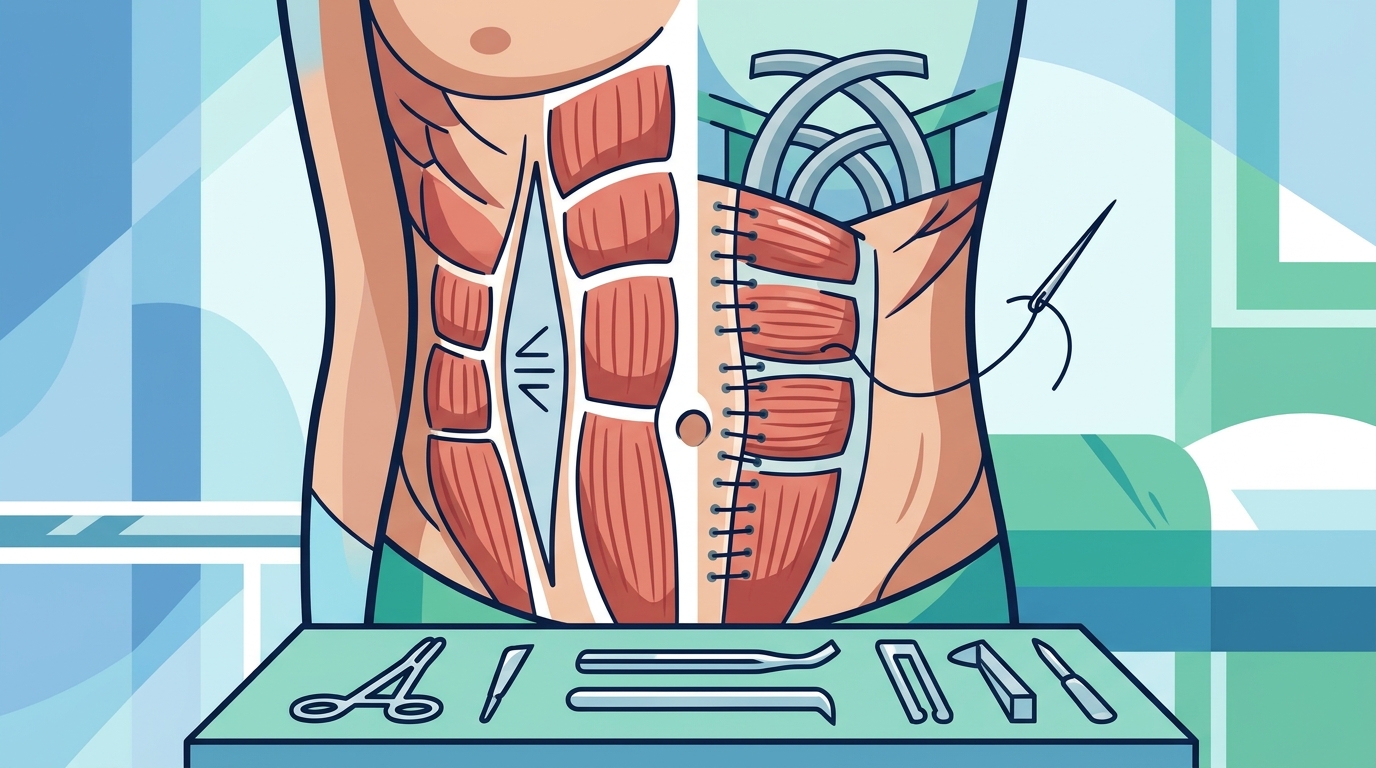
Diastasis recti is a condition where the two halves of the rectus abdominis muscle separate, creating a gap in the midline. This separation often occurs during pregnancy or after significant weight fluctuations. When the muscles pull apart, the abdominal wall loses its tension, leading to a protruding belly that resists diet and exercise. For additional details, review the About Ultimo Clinic.
Without surgical correction, the abdominal wall remains weak and unsupported. The skin and fat may appear loose, but the underlying structural failure is the primary cause of the bulge. Understanding this anatomy is essential for setting realistic expectations for surgical outcomes. For additional details, review the Ultimo Clinic Klinik Bedah.
The Surgical Technique of Plication
Plication is the surgical suturing of the separated muscles back together to restore their natural alignment. During a tummy tuck, the surgeon accesses the muscle layer beneath the skin and fat. By stitching the muscles together, the surgeon re-establishes the tension of the abdominal wall. For additional details, review the Kontak Ultimo Clinic.
This technique is distinct from simple skin excision. While removing excess skin improves appearance, it does not address the underlying muscle separation. Plication provides the structural foundation that allows the overlying skin to lie flat against the body. It is a precise process that requires careful assessment of the degree of separation. For additional details, review the Articles Ultimo Clinic.
Functional Benefits Beyond Aesthetics
Aesthetic Outcomes and Contouring
Muscle repair creates a flatter, more contoured abdomen that complements the removal of excess skin. The tightened muscles provide a firm base for the skin to drape over, resulting in a smoother silhouette. This structural change is crucial for achieving a natural-looking result that does not appear artificially deflated.
At Ultimo Clinic, surgeons combine plication with other techniques like liposuction to refine the waistline. The combination of muscle repair and fat reduction allows for a more dramatic and harmonious transformation. This approach ensures that the final result is both aesthetically pleasing and structurally sound.
Long-Term Durability of Results
Proper muscle repair contributes to the longevity of tummy tuck results. By restoring the abdominal wall's tension, the repair helps maintain the new contour over time. Patients who maintain a stable weight and engage in appropriate core exercises can preserve their results for many years.
Without plication, the abdominal wall may gradually loosen again, leading to a recurrence of the bulge. The structural integrity provided by muscle repair acts as a permanent anchor for the skin and soft tissues. This durability is a key advantage of a comprehensive tummy tuck procedure.
Key Takeaways
- Abdominal muscle repair, or plication, is a core component of tummy tuck surgery that addresses diastasis recti.
- Plication restores core strength and improves posture, offering functional benefits beyond aesthetics.
- The technique creates a flatter, more contoured abdomen by re-establishing abdominal wall tension.
- Combining muscle repair with skin excision and liposuction yields the most harmonious results.
- Proper repair contributes to the long-term durability of tummy tuck outcomes.
- Patients at Ultimo Clinic benefit from a structured approach that prioritizes both safety and aesthetic precision.
Frequently Asked Questions
What is abdominal muscle repair in a tummy tuck?
Abdominal muscle repair is the surgical suturing of separated rectus abdominis muscles to restore core strength and flatten the abdomen.
Does a tummy tuck always include muscle repair?
How long does it take to recover from muscle repair?
Recovery typically takes several weeks, with full healing of the muscles taking several months. Patients are advised to avoid heavy lifting during this period.
Can muscle repair improve back pain?
Yes, restoring abdominal wall tension can reduce strain on the lower back, potentially alleviating chronic back pain for some patients.
Is muscle repair permanent?
The repair is permanent, but maintaining a stable weight and engaging in appropriate exercises helps preserve the results over time.