

Deep Plane Facelift Longevity: How Long Do Results Actually Last?
The Structural Basis of Longevity
Traditional facelifts often focus on the superficial skin layer, which naturally loses elasticity over time. A deep plane facelift is a surgical technique that repositions the midface and lower face tissues at the deep structural level, beneath the SMAS (Superficial Musculoaponeurotic System). This approach addresses the root cause of aging, which is the descent of fat pads and soft tissue, rather than just tightening the surface. By anchoring these deeper structures, the lift resists the downward pull of gravity more effectively.
At Ultimo Clinic, our surgeons emphasize that the longevity of a facelift depends on how well the underlying architecture is restored. When the midface is properly elevated, the skin drape becomes more natural and stable. This structural integrity means that as you continue to age, the changes are gradual and subtle, rather than the sudden sagging often seen after less comprehensive procedures. The result is a face that looks refreshed for a decade or more, without the "pulled" appearance that can signal a previous surgery.
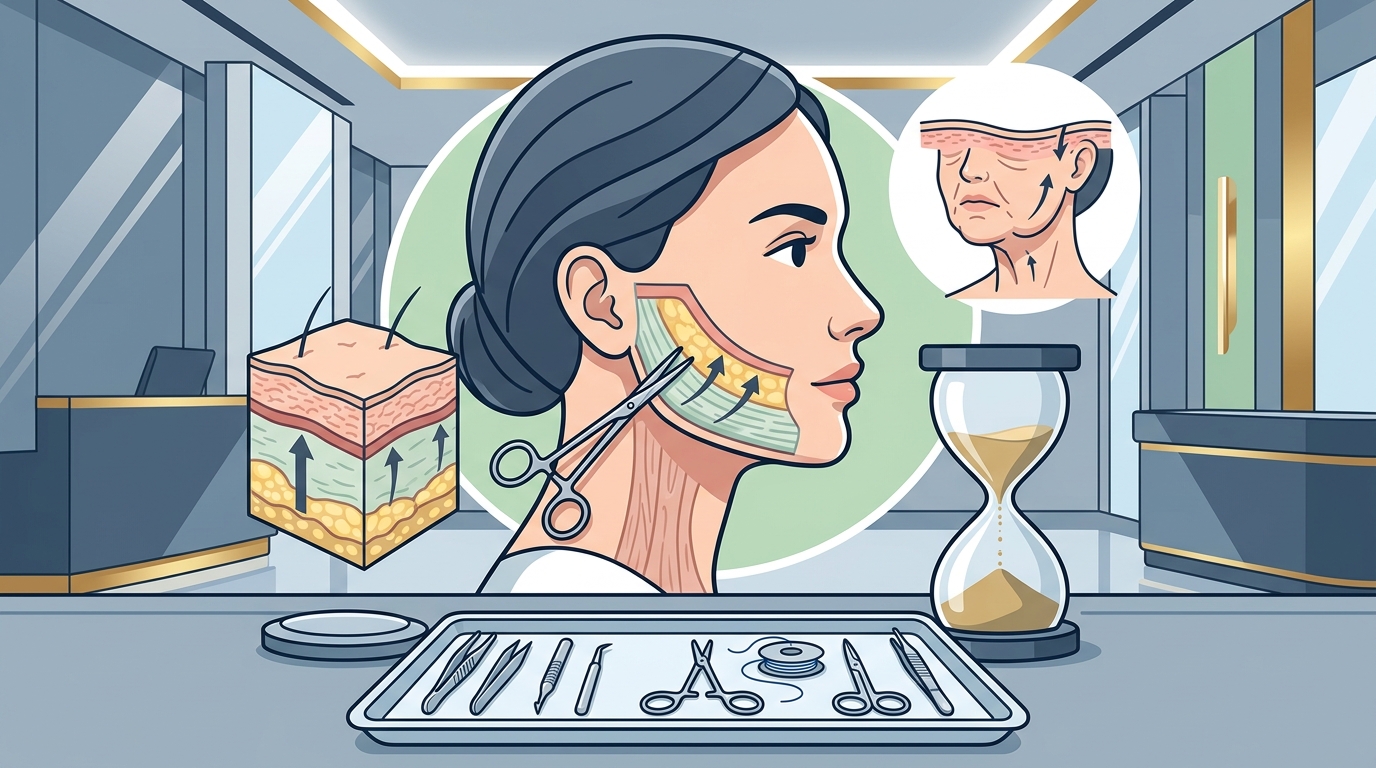
Comparing Traditional vs. Deep Plane Durability
When comparing the two methods, the difference in longevity is substantial. A standard skin-only facelift may provide a dramatic initial change, but the skin continues to age independently of the underlying support. This often leads to a For additional details, review the Kontak Ultimo Clinic.