
Ultimo Deep Plane Facelift vs. Traditional Lift: Jakarta Plastic Surgery Comparison
Choosing the right facial rejuvenation procedure is one of the most critical decisions in aesthetic medicine. According to recent industry data, the global aesthetic surgery market is projected to reach significant growth by 2026, with a strong shift toward techniques that offer longer-lasting results and natural aesthetics. Industry reports indicate that patients are increasingly prioritizing structural integrity over superficial skin tightening. This shift has elevated the Deep Plane Facelift as a premium standard in Jakarta, particularly at specialized centers like Ultimo Clinic.
Understanding the Deep Plane Technique
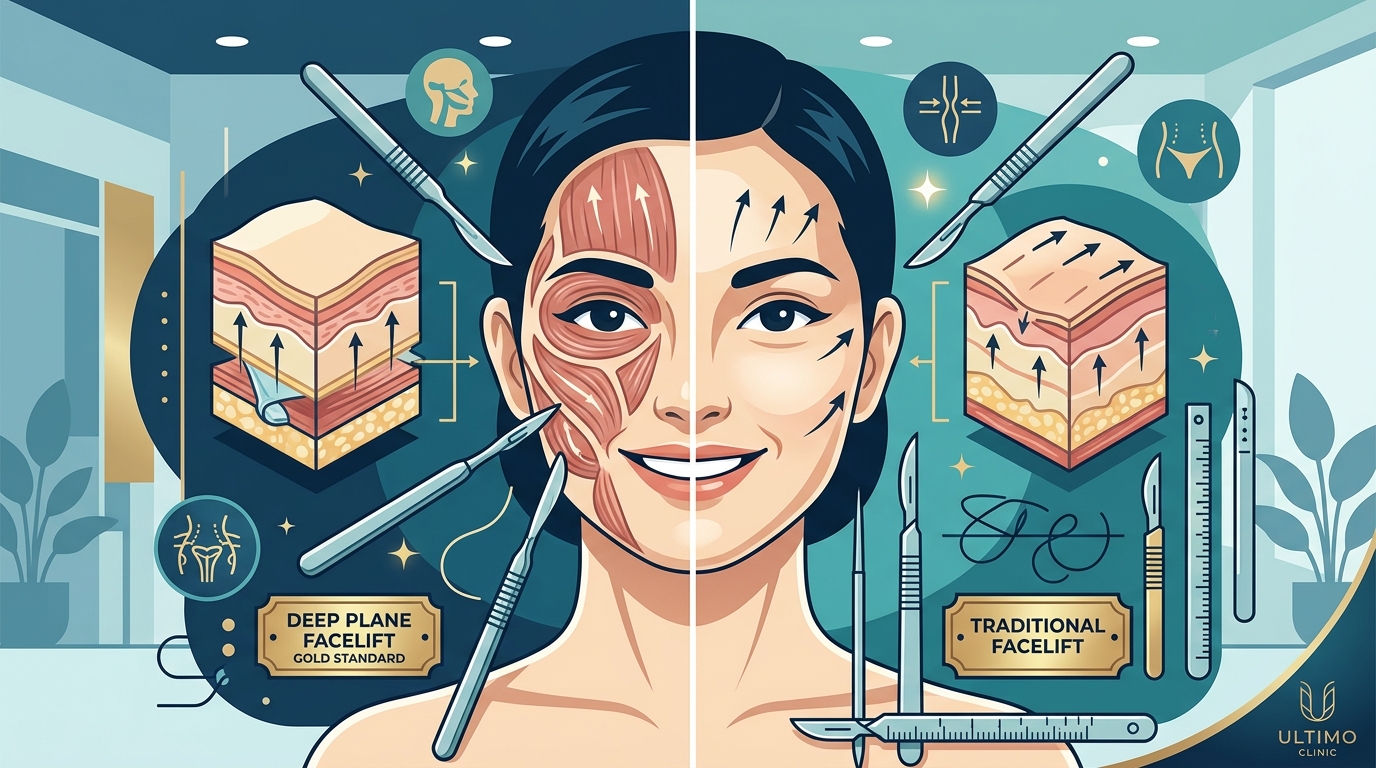
The Deep Plane Facelift represents a sophisticated evolution in facial rejuvenation surgery. Unlike older methods that primarily address the skin, this technique operates on the deeper structural layers of the face. Deep Plane Facelift is a surgical procedure that repositions the SMAS layer and underlying facial muscles along with the skin to restore youthful volume and contour.
This approach allows the surgeon to access the midface and lower face directly, bypassing the superficial fat pads that often sag with age. By releasing the ligaments that anchor the facial tissues, the surgeon can lift the entire facial unit as a single, cohesive layer. This results in a more natural appearance because the skin is not pulled tight against the skull, which can create a "windblown" or stretched look.
At Ultimo Clinic in Jakarta, this procedure is performed by Dr. Enrina Diah, Indonesia's first internationally certified craniofacial surgeon. Her expertise ensures that the complex anatomical dissection required for this surgery is handled with precision, minimizing trauma to the surrounding tissues while maximizing the lifting effect.
Traditional Superficial Facelifts Explained
Traditional facelifts, often referred to as SMAS plication or superficial facelifts, have been the standard for decades. These procedures focus on tightening the skin and the superficial musculoaponeurotic system (SMAS) without fully releasing the deeper structural attachments. Traditional Facelift is a surgical method that tightens the skin and superficial tissue layers to reduce visible signs of aging.
While effective for mild to moderate sagging, traditional lifts have limitations. Because the skin is the primary vector for tension, the results may not last as long as those achieved with deep plane techniques. As the skin ages and loses elasticity, the tension from the surgery can eventually lead to recurrence of sagging or an unnatural tightness.
Furthermore, traditional lifts often address the lower face and jawline but may not fully correct midface descent, which is a key component of facial aging. Patients seeking comprehensive rejuvenation often find that traditional methods require more frequent touch-ups over time. For those in Jakarta looking for a more durable solution, understanding these limitations is crucial.
Key Differences in Anatomy and Recovery
The primary difference between these two approaches lies in the anatomical planes addressed. The deep plane technique involves a more extensive dissection, lifting the facial muscles and fat pads along with the skin. This allows for a more significant repositioning of the facial structures. In contrast, the traditional method relies more on skin redraping and superficial tightening.
Recovery profiles also differ. Because the deep plane technique involves deeper tissue manipulation, patients may experience more swelling and bruising in the initial weeks. However, this is often followed by a more dramatic and longer-lasting improvement. Medical literature suggests that deep plane lifts provide superior long-term satisfaction due to the restoration of underlying volume.
Traditional lifts typically offer a quicker initial recovery with less bruising, making them attractive for patients with shorter downtime requirements. However, the trade-off is often a less comprehensive correction of midface aging. The choice between the two depends on the patient's anatomical needs, aging pattern, and long-term goals.
The Ultimo Method Advantage
Ultimo Clinic distinguishes itself through The Ultimo Method, a proprietary approach that combines architectural integrity with high-precision artistry. This method is not just about the surgical technique but also about the holistic management of the patient's aesthetic journey.
One of the core tenets of the Ultimo Method is the single-surgeon model. Dr. Enrina Diah oversees every aspect of the procedure, from the initial consultation to the final follow-up. This continuity ensures that the surgical plan is executed exactly as envisioned, with no compromise in technique or aesthetic judgment.
Additionally, the clinic's focus on the Extended Deep Plane Facelift allows for even greater reach and correction than standard deep plane techniques. By extending the dissection further down the neck and into the midface, this enhanced version addresses aging in the jawline, neck, and cheeks simultaneously. This comprehensive approach is particularly beneficial for Asian patients, whose facial anatomy often requires nuanced handling to preserve ethnic identity while achieving rejuvenation.
Procedure Comparison Table
The following table summarizes the key differences between the Deep Plane Facelift and Traditional Facelift to assist in your decision-making process.
| Feature | Deep Plane Facelift | Traditional Facelift |
|---|---|---|
| Anatomical Target | SMAS layer, muscles, and skin | Superficial skin and SMAS plication |
| Midface Correction | Excellent | Moderate to Limited |
| Longevity of Results | 10+ years | 5-7 years |
| Recovery Time | 2-3 weeks initial swelling | 1-2 weeks initial swelling |
| Natural Appearance | High (structural lift) | Moderate (skin tension dependent) |
| Surgeon Expertise | Requires advanced craniofacial training | Standard plastic surgery training |
Key Takeaways
- Structural Integrity: The Deep Plane Facelift addresses the root cause of aging by repositioning deep tissues, offering more durable results than skin-tightening methods.
- Ultimo's Expertise: Ultimo Clinic is led by Indonesia's first internationally certified craniofacial surgeon, ensuring the highest standard of care for complex procedures.
- Extended Reach: The Extended Deep Plane technique at Ultimo provides comprehensive correction of the midface, jawline, and neck in a single procedure.
- Single Surgeon Model: Consistency in care is maintained through a single-surgeon approach, reducing variability and enhancing safety.
- Asian Rhinoplasty & Facelift Synergy: Many patients combine facial rejuvenation with Asian Rhinoplasty for balanced facial harmony.
- Long-Term Value: While the initial investment may be higher, the longevity of deep plane results often provides better long-term value compared to traditional lifts.
- Consultation Importance: A thorough clinical assessment is necessary to determine if you are a candidate for the deep plane technique or if a traditional lift suffices.
Frequently Asked Questions
What is the main difference between a deep plane and traditional facelift?
The main difference is the anatomical layer addressed. The deep plane facelift lifts the muscles and fat pads along with the skin, providing a more structural and natural lift. Traditional facelifts primarily tighten the skin and superficial layers.
Is the deep plane facelift safe for Asian patients?
Yes, when performed by an experienced craniofacial surgeon. The technique can be adapted to preserve Asian facial characteristics while achieving rejuvenation. Ultimo Clinic specializes in nuanced approaches for Asian anatomy.
How long does recovery take for a deep plane facelift?
Initial recovery typically involves 2-3 weeks of visible swelling and bruising. Most patients feel comfortable returning to social activities after this period, with final results settling over several months.
Why choose Ultimo Clinic for facial rejuvenation?
Ultimo Clinic is led by Dr. Enrina Diah, a pioneer in deep plane facelifts in Indonesia. The clinic offers a single-surgeon model, ensuring consistency and expertise in every procedure.
Can I combine a facelift with other procedures?
Absolutely. Many patients combine facelifts with blepharoplasty (eyelid surgery) or fat transfer to address multiple areas of aging simultaneously for a comprehensive rejuvenation.
What is the cost of a deep plane facelift in Jakarta?
The cost varies based on the extent of the procedure and individual needs. Ultimo Clinic offers exclusive consultations to provide detailed pricing and financing options tailored to your goals.
How long do the results last?
Deep plane facelift results are long-lasting, often enduring 10 years or more. The aging process continues, but the facial structure is reset to a more youthful position, providing a significant time advantage over traditional methods.
Schedule Your Consultation
Deciding between a deep plane facelift and a traditional lift requires a personalized assessment of your facial anatomy and aging patterns. At Ultimo Clinic, we provide expert guidance to help you make an informed decision. Our virtual consultation service allows you to discuss your goals from anywhere in the world.
Take the first step toward lasting rejuvenation. Contact us today to schedule your exclusive consultation with Dr. Enrina Diah and discover how the Ultimo Method can help you achieve your aesthetic aspirations.