

How to Determine If You Are a Good Candidate for Breast Augmentation
According to recent industry data, breast augmentation remains the most requested cosmetic procedure globally, with millions of patients seeking enhanced proportions annually. Understanding whether you meet the clinical and psychological prerequisites for this procedure is essential before scheduling a consultation. This guide outlines the exact evaluation criteria used by board-certified surgeons to determine surgical eligibility. You will learn how to assess your anatomical readiness, review implant options, and navigate the consultation process with complete confidence.
Understanding Core Candidate Criteria
Identifying your eligibility begins with a clear understanding of the foundational requirements. Breast augmentation candidate status depends on meeting specific age, health, and motivation benchmarks. The American Society of Plastic Surgeons reports that over 300,000 procedures are performed annually in the United States alone. This volume highlights the widespread demand for enhanced breast volume and improved symmetry. You must be physically mature and emotionally prepared to undergo elective surgery. Surgeons typically require patients to be at least 18 years old for saline implants and 22 years old for silicone gel implants. This age restriction ensures that breast development has fully stabilized. You should also maintain a stable weight within 10 percent of your ideal body mass. Significant weight fluctuations can compromise long-term surgical outcomes. You must have realistic expectations regarding scar placement and final implant positioning. Breast implant surgery is a highly customizable procedure that requires precise anatomical mapping. Your chest wall structure, skin elasticity, and existing tissue volume dictate which surgical approach will yield the most natural result. Patients with mild ptosis often benefit from a combined breast lift with implants procedure. Those seeking volume restoration after pregnancy or weight loss may require specialized fat transfer techniques. Understanding these baseline requirements prevents unnecessary procedures and ensures optimal healing.
Evaluating Physical Health and Anatomical Readiness
Physical readiness determines whether your body can safely tolerate anesthesia and recover without complications. Cosmetic breast surgery requires a clean bill of health from your primary care physician. You must undergo standard preoperative blood work and cardiac screening. Current guidelines from the American College of Surgeons indicate that patients with uncontrolled hypertension or diabetes face higher infection risks. You should discontinue smoking at least four weeks before and after your procedure. Nicotine restricts blood flow to surgical incisions and significantly delays tissue repair. Your existing breast tissue volume directly impacts implant selection. Patients with minimal natural tissue often require textured or cohesive gel implants to prevent visible rippling. Those with adequate native tissue can safely choose smooth silicone options. You must also disclose any history of autoimmune disorders or previous chest trauma. Prior radiation therapy or chest wall injuries may require specialized breast reconstruction after cancer protocols. Your surgeon will measure your chest width, nipple position, and skin stretch to calculate the ideal implant profile. This anatomical mapping ensures that your chosen device complements your natural frame. You will receive a detailed surgical roadmap outlining incision placement and pocket positioning. Subglandular, submuscular, and dual-plane techniques each carry distinct recovery timelines. Your physical readiness directly correlates with your final aesthetic outcome.
Assessing Psychological Readiness and Expectations
Motivation and emotional stability play a critical role in surgical satisfaction. Determine surgery eligibility by asking yourself why you desire enhanced breast volume. Patients seeking validation from external sources often experience postoperative regret. Clinical studies published in the Aesthetic Surgery Journal demonstrate that patients with stable self-image report higher satisfaction rates. You should pursue surgery to align your physical appearance with your internal self-perception. Unrealistic expectations regarding implant size or shape frequently lead to dissatisfaction. You must understand that implants are medical devices requiring lifelong monitoring. The Food and Drug Administration mandates regular imaging checks to monitor implant integrity. You should review before-and-after galleries from your chosen clinic to visualize realistic outcomes. Your surgeon will assess your body proportions and recommend dimensions that harmonize with your hips and shoulders. You must be comfortable discussing your desired cup size and profile preference. Psychological readiness also involves accepting the presence of permanent scarring. Incision placement along the inframammary fold, periareolar region, or transaxilla leaves subtle but permanent marks. You should review our detailed article on sexy artificial breasts safe for health to understand long-term maintenance. Emotional preparedness ensures that your decision remains firm regardless of temporary postoperative swelling. You will experience a gradual settling period where implants drop and fluff into their final position. Patience during this phase is essential for long-term satisfaction.
Reviewing Implant Options and Surgical Techniques
Implant selection directly influences your surgical candidacy and final aesthetic result. Breast augmentation candidate profiles vary based on tissue thickness, chest width, and desired projection. Saline implants offer adjustable volume and smaller incision requirements. Silicone gel implants provide a more natural feel and reduced rippling visibility. Cohesive gel implants maintain their shape even if the outer shell ruptures. Your surgeon will recommend a specific device based on your anatomical measurements. The International Society of Aesthetic Plastic Surgery reports that silicone implants account for over 70 percent of all procedures. This preference stems from their superior tactile quality and lower revision rates. You must decide between smooth and textured surface finishes. Textured implants reduce capsular contracture risk but carry specific regulatory considerations. Smooth implants allow more natural movement but may require precise pocket dissection. Your surgical technique determines implant placement and recovery speed. Submuscular placement covers the implant with pectoral muscle tissue for a natural slope. Subglandular placement positions the device above the muscle for quicker recovery. Dual-plane techniques combine both approaches to optimize coverage and projection. You will review detailed implant catalogs during your consultation. Your surgeon will match your chest dimensions to the appropriate implant base width. This precise matching prevents lateral displacement or symmastia. You should also consider future pregnancy plans when selecting your device. Pregnancy and breastfeeding can alter implant positioning and tissue elasticity. Your surgeon will document your current breast measurements and mark your surgical boundaries. This documentation ensures precise intraoperative execution. You will receive a comprehensive device warranty and tracking registration. Proper implant selection guarantees long-term aesthetic stability.
Navigating Consultation Protocols and Medical Screening
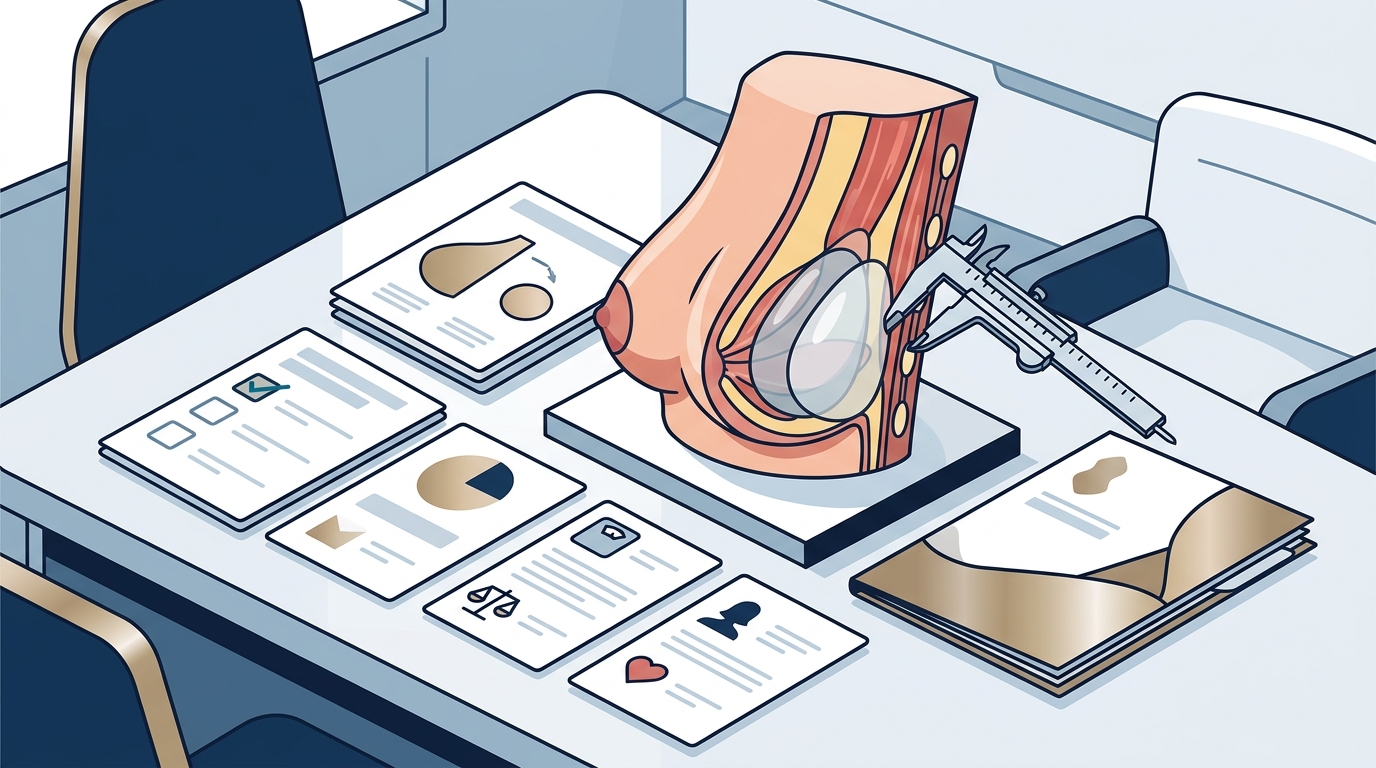
A thorough consultation establishes your surgical roadmap and confirms your candidacy. Breast implant surgery requires a detailed medical history review and physical examination. Your surgeon will assess your chest wall symmetry, nipple position, and skin quality. You will undergo standard laboratory testing to verify your surgical readiness. Current clinical guidelines recommend baseline mammography for patients over 40 years old. This imaging establishes a preoperative tissue baseline for future comparisons. You will discuss your lifestyle, occupation, and recovery timeline with your surgical team. Patients with demanding physical jobs may require extended downtime. Your surgeon will outline the exact incision placement and pocket positioning. You will review 3D imaging simulations to visualize your projected outcome. This technology helps align your expectations with surgical possibilities. You will receive a detailed cost breakdown covering facility fees, anesthesia, and implants. Transparent pricing prevents unexpected financial burdens during your recovery. Your surgeon will address all medical concerns and answer your questions. You will sign comprehensive informed consent documents outlining risks and benefits. Your medical records will be securely stored for future reference. You will receive preoperative instructions regarding medication restrictions and fasting. Your surgical team will coordinate your facility booking and anesthesia schedule. You will meet your dedicated nursing staff before your procedure day. This preparation ensures a seamless and stress-free surgical experience. Your consultation establishes the foundation for a successful outcome.
Key Takeaways
- Patients must be physically mature and maintain stable weight within 10 percent of ideal body mass.
- Saline implants require patients to be at least 18 years old, while silicone gel implants require age 22.
- Current industry data shows over 300,000 procedures performed annually in the United States alone.
- Smoking cessation is mandatory for at least four weeks before and after surgery to ensure proper healing.
- Silicone gel implants account for over 70 percent of all procedures according to international surgical statistics.
- Baseline mammography is recommended for patients over 40 years old to establish tissue baselines.
- Ultimo Clinic offers specialized breast implant exchange services for long-term maintenance.
Frequently Asked Questions
What age do I need to be for breast augmentation?
You must be at least 18 years old for saline implants and 22 years old for silicone gel implants. This age requirement ensures that your breast development has fully stabilized before surgery.
How do I know if my natural tissue can support implants?
Your surgeon will measure your chest width, skin elasticity, and existing tissue volume. Patients with minimal natural tissue often require textured or cohesive gel implants to prevent visible rippling.
Will breast augmentation affect my ability to breastfeed?
Most patients retain full breastfeeding capability after surgery. Incision placement along the inframammary fold typically preserves milk duct integrity and nerve function.
How long do breast implants last?
Implants are not lifetime devices and may require replacement after 10 to 15 years. Regular imaging checks monitor implant integrity and prevent silent rupture complications.
What is the recovery timeline for breast augmentation?
Most patients return to light desk work within 5 to 7 days. Full recovery and unrestricted exercise typically require 4 to 6 weeks of careful monitoring.
Can I combine breast augmentation with a lift?
Yes, patients with mild ptosis often benefit from a combined breast lift with implants procedure. This approach addresses both volume loss and tissue sagging simultaneously.
How much does breast augmentation cost?
Consultation fees range from 700,000 to 1,000,000 IDR depending on your selected surgeon. Total procedure costs vary based on implant type, facility fees, and anesthesia requirements.
Schedule Your Personalized Evaluation
Determining your eligibility requires a comprehensive medical review and anatomical assessment. Breast augmentation candidate status is confirmed through direct consultation with our board-certified surgeons. You will receive a detailed surgical roadmap, implant recommendations, and transparent pricing. Our Jakarta clinic offers advanced surgical techniques and personalized care protocols. You can book your appointment directly through our secure scheduling platform. Visit our contact page to select your preferred physician and preferred date. Our team will confirm your consultation time and provide preoperative instructions. You will receive a detailed cost breakdown and facility booking confirmation. Your surgical journey begins with a single phone call. Contact us today to secure your preferred consultation slot and begin your transformation.
| Implant Type | Best Candidate Profile | Recovery Timeline | Long-Term Maintenance |
|---|---|---|---|
| Saline Implants | Patients preferring adjustable volume and smaller incisions | 5 to 7 days for light activity | Regular monitoring for rupture detection |
| Silicone Gel Implants | Patients prioritizing natural feel and reduced rippling | 7 to 10 days for light activity | Annual imaging checks recommended |
| Cohesive Gel Implants | Patients requiring shape retention and minimal displacement | 7 to 10 days for light activity | Long-term stability with routine checks |